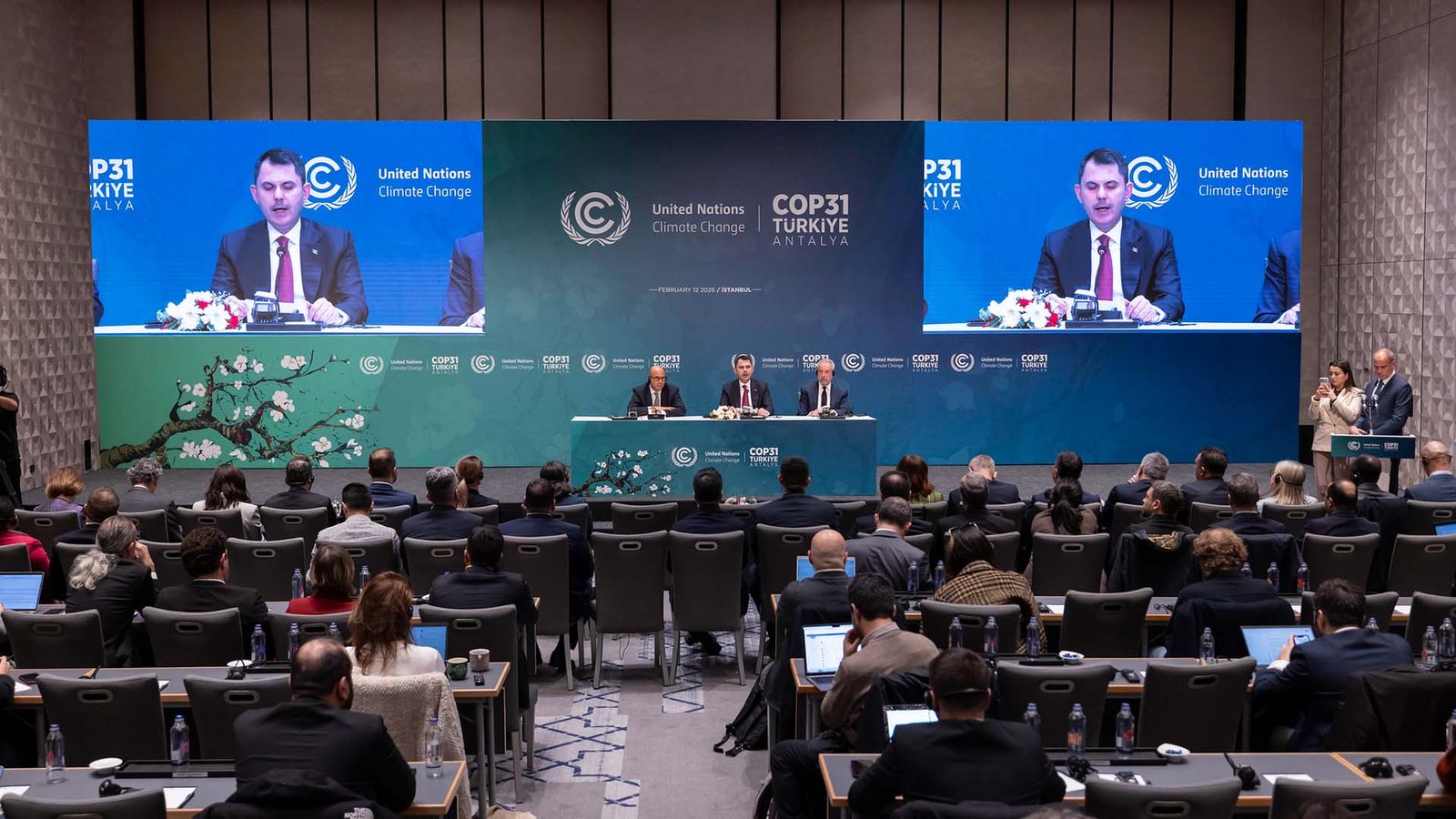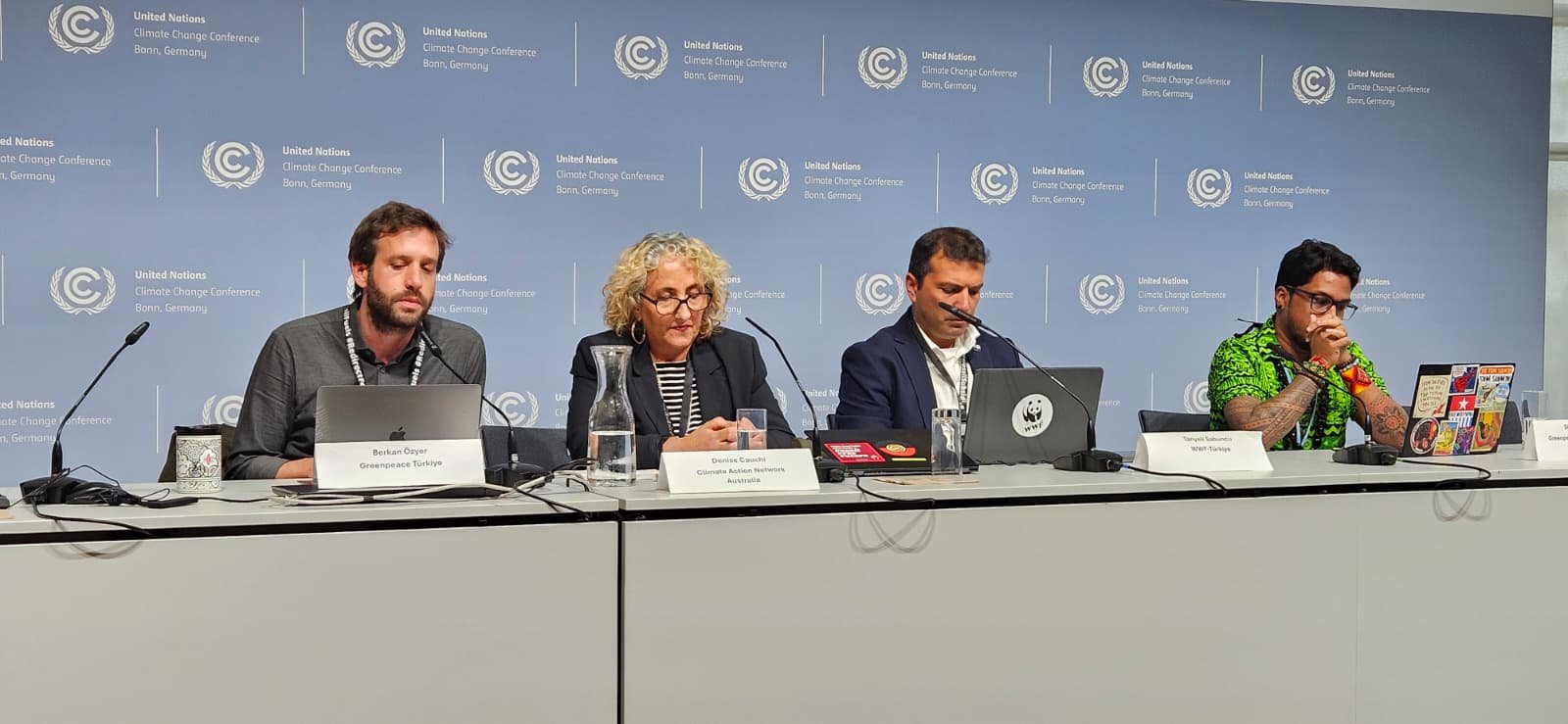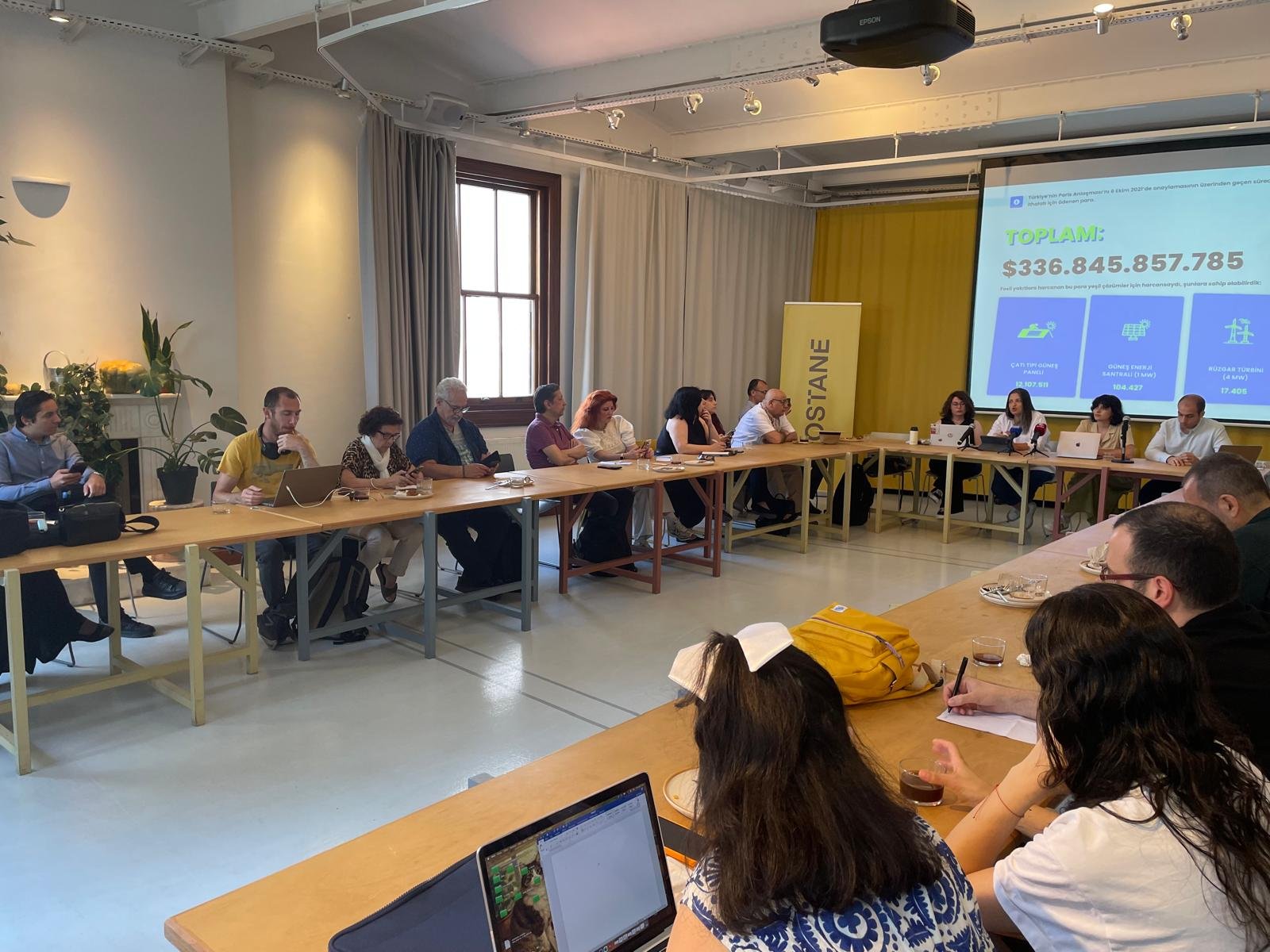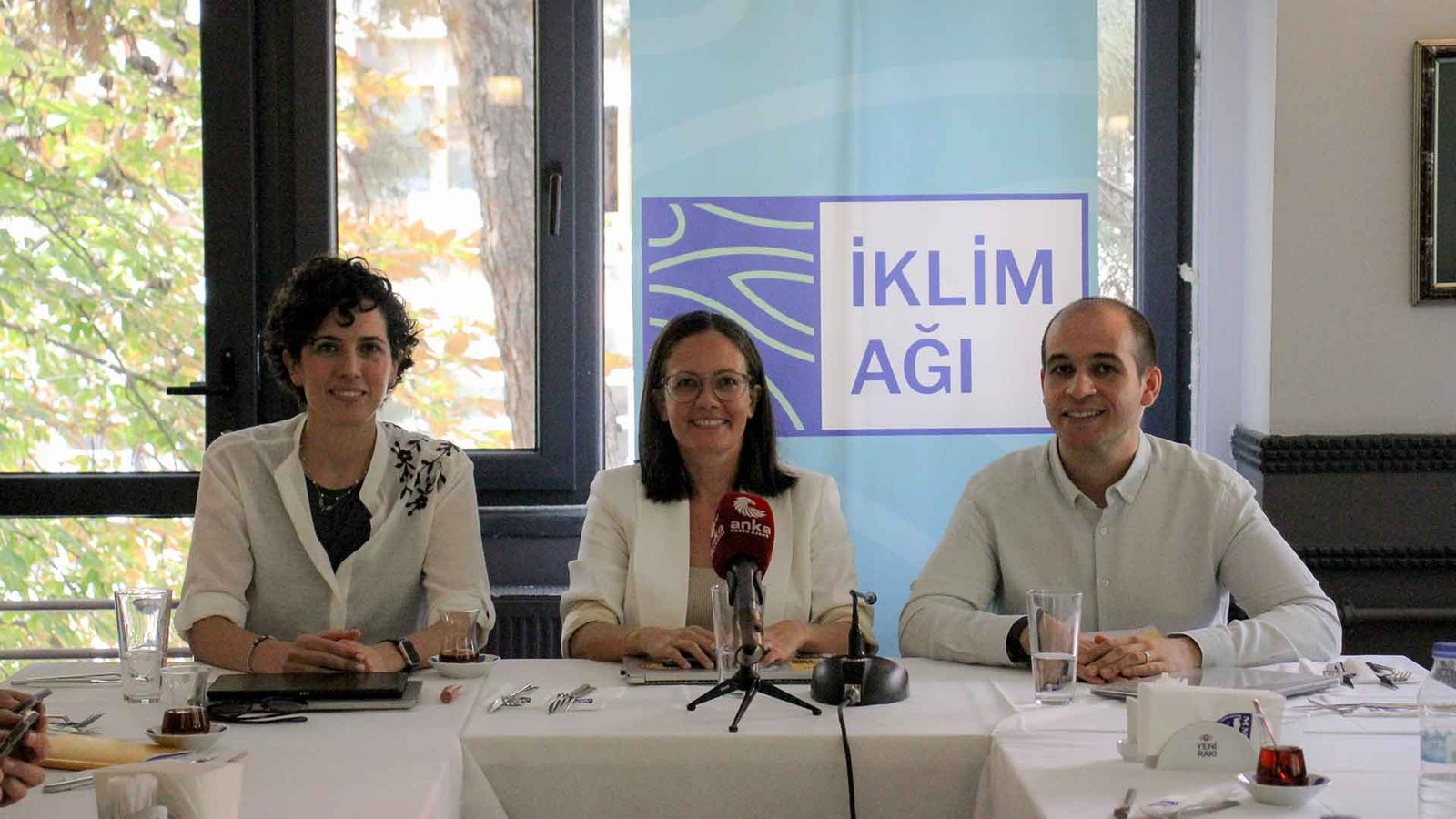
The Climate Network Türkiye, a coalition of 17 civil society organisations working on climate issues, held its third press conference in Ankara ahead of the COP31 Climate Summit. The Network highlighted that the launch of the permitting process for a new imported coal-fired power plant in Çanakkale contradicts the climate goals Türkiye has set out as the host and president of COP31.
Although a court overturned the Environmental Impact Assessment (EIA) decision for the new units planned for the Afşin-Elbistan A Coal-Fired Power Plant, the Ministry of Environment, Urbanisation and Climate Change appealed the ruling. In addition, plans are under way to add a new 1,050 MW unit to an existing coal-fired power plant in Çanakkale. These developments show that Türkiye must translate its energy transition into concrete action and begin the transformation at home.
Expectation from COP31: Leadership on the transition away from fossil fuels
At the press conference, speakers stated that, in addition to its climate impacts, the project would increase Türkiye’s dependence on foreign energy sources and intensify the pressures of air pollution on public health, agriculture, fisherƒies and tourism. They also warned that discharging 152,500 m³ of heated water into the sea every hour would pose a serious risk to the Sea of Marmara and the habitats of Mediterranean monk seals.
The Climate Network Türkiye also noted that its requests to meet COP31 President Murat Kurum have not yet received a response and called for structured participation mechanisms to be established.
Experts said the goal announced by the COP31 President to increase electricity’s share of global final energy consumption to 35 per cent by 2035, offers an important opportunity. They stressed, however, that for this goal to support the decarbonisation of energy, Türkiye must implement renewable energy, energy efficiency, energy storage and clean flexibility solutions instead of pursuing new coal and fossil fuel investments.
Speakers emphasised that Türkiye, as the host and president of the COP31 Climate Summit, must demonstrate strong and effective political leadership capable of advancing the global transition away from fossil fuels. They underlined that this leadership must also be backed by domestic policies, delivering the message: “The road to electrification does not run through coal, but through a just transition away from coal.”
“Participation at COP31 must not remain rhetoric; it must be put into practice through concrete mechanisms”
Yağız Eren Abanus, Climate Justice Programme Coordinator at the Centre for Spatial Justice, said they value the COP31 Presidency’s strong emphasis on participation and expect this approach to be implemented through concrete and meaningful mechanisms.
“As the Climate Network Türkiye, we have received no response to our request for a meeting with the COP31 President. Participation must be more than rhetoric; it must be an approach to governance in which civil society is heard regularly and its proposals are reflected in policymaking processes.
Türkiye’s climate record also shows why this approach matters. While its 2035 climate target (NDC) provides a framework that permits emissions to rise rather than requiring reductions, the ministry holding the COP31 Presidency is appealing the cancellation of the 688 MW new coal project in Afşin-Elbistan. A further 1,050 MW of new capacity is also planned for the coal-Fired Power Plant in Çanakkale.
To strengthen its claim to climate leadership as the COP31 President, Türkiye must abandon new coal investments and take concrete steps towards a just and planned coal phase-out.”
“Türkiye’s coal regions must not be forgotten while advocating a just transition at COP31”
Özlem Katısöz, Climate and Energy Policy Coordinator for Türkiye at Climate Action Network Europe (CAN Europe), said workers and coal regions are paying the price for the unplanned decline of Türkiye’s shrinking coal sector and called for just transition policies to be implemented without delay:
“We do not consider coal a critical issue solely from the perspective of climate policy. Türkiye’s coal sector is shrinking, and workers and coal regions are paying the price for this unplanned collapse. The Energy Ministry’s efforts to keep the sector survive through incentives for companies that own coal-fired power plants do not secure workers’ wages, compensation or futures.
From mine workers fighting for unpaid wages to the Soma Coal-Fired Power Plant facing enforcement proceedings over its debts, recent events make this abundantly clear. Türkiye could have anticipated this transformation years ago and introduced just transition policies to protect workers and local economies in coal regions. The omission of the coal regions—where economic transformation and job losses are already taking place—from the National Just Transition Strategy that the Ministry of Labour and Social Security will present at COP31 undermines the strategy’s claim to deliver a just transition before it has even begun.
While advocating a just transition internationally through its COP31 Presidency, Türkiye must also recognise the unplanned collapse unfolding in its coal regions and start planning the transformation today, together with workers and households.”
“A transition away from fossil fuels is essential for electrification to become climate action”
Bengisu Özenç, Director of the Sustainable Economics and Finance Research Association (SEFiA), said the global electrification goal announced by COP31 President Murat Kurum presents an important opportunity to achieve climate targets, but must be pursued in conjunction with the transition away from fossil fuels:
“We see COP31 President Murat Kurum’s global electrification goal as an important and necessary step towards achieving climate targets. Electrifying sectors that currently depend on fossil fuels, such as transport, buildings and industry, offers a critical opportunity to decarbonise the energy system.
It is important to stress, however, that positioning renewable energy merely to meet the new electricity demand created by this goal will not deliver decarbonisation. The electrification goal can become meaningful climate action only if fossil fuels are phased out of the existing electricity system. The electrification agenda must therefore be pursued together with the agenda of transitioning away from fossil fuels.
A genuine electrification strategy must address participation, social justice, rapid and planned renewable energy investment, energy efficiency, energy storage and clean flexibility solutions together, while simultaneously guaranteeing the transition away from fossil fuels. For the electrification goal advanced by Türkiye under its COP31 Presidency to become genuine climate leadership, what we need is not more coal but a clean, flexible and renewable based energy system.”