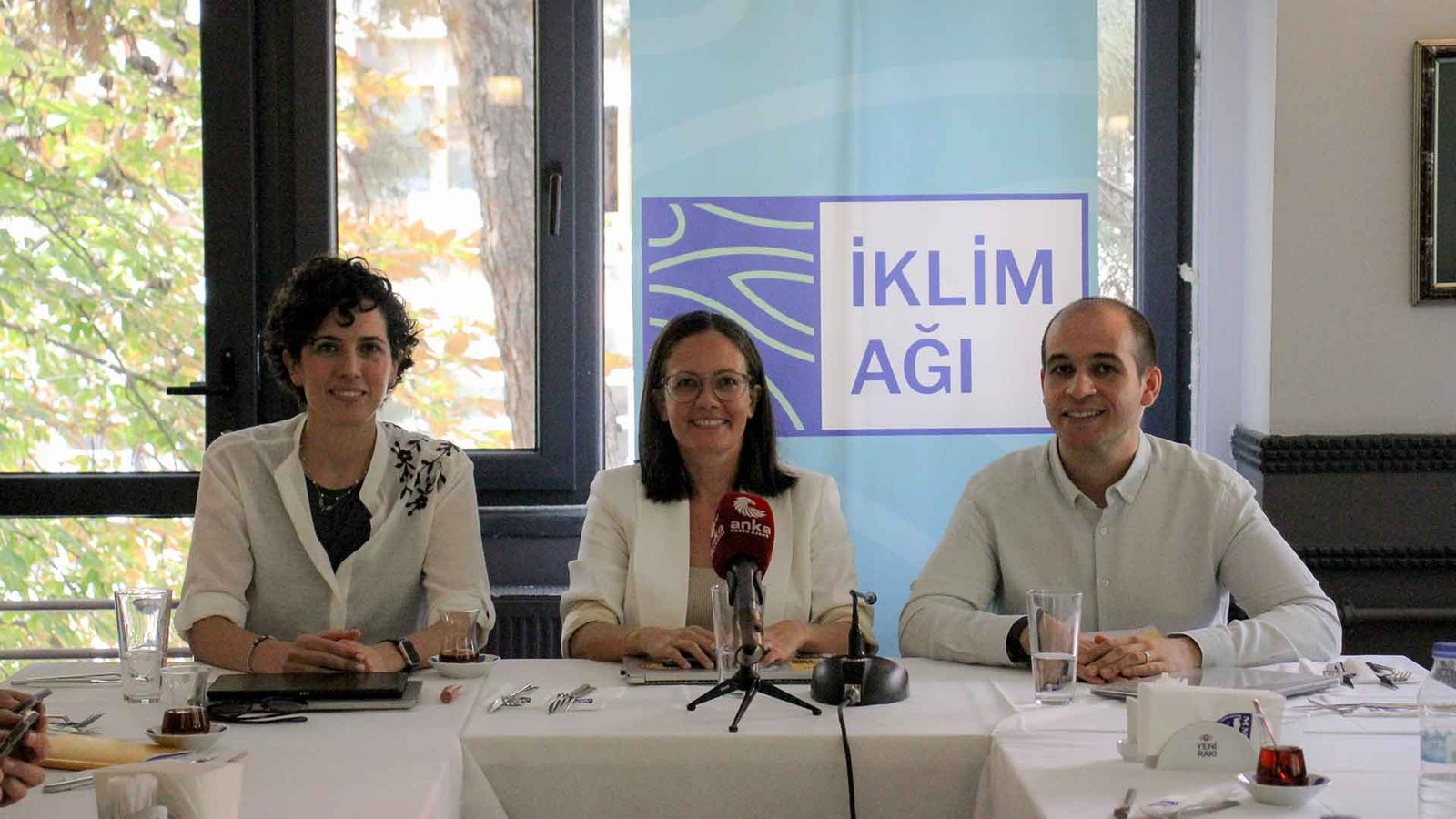
In a joint statement, the İklim Ağı (Climate Network Türkiye) stated that the new incentive package continues to increase the profits of polluting companies, hinders the expansion of clean energy, and puts public health and public finances at risk.
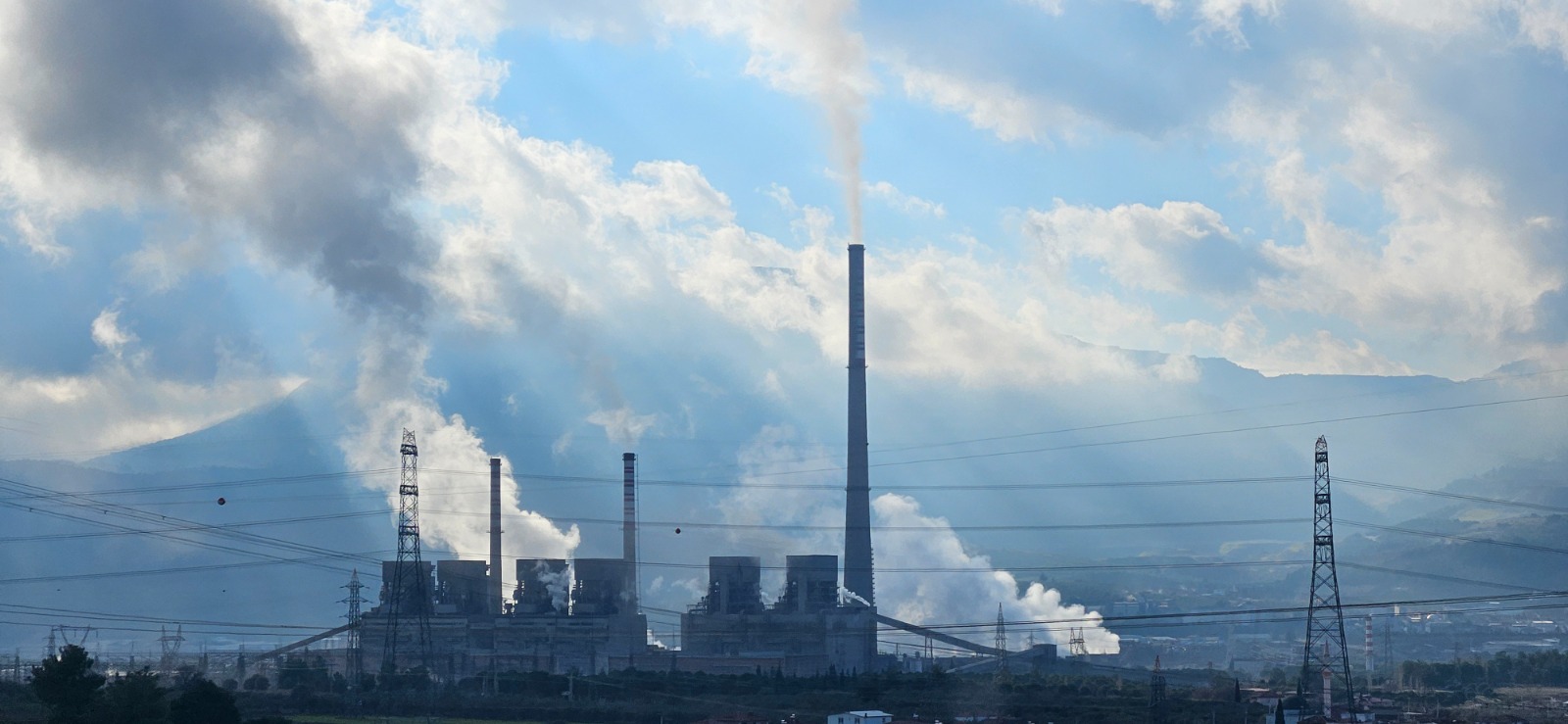
Following the announcement of the new incentive package by the Ministry of Energy and Natural Resources, Electricity Generation Corporation of Turkey (EÜAŞ) began signing power purchase agreements with thermal power plant operators. According to the package announced by the Minister, electricity generated at domestic coal-fired power plants will be purchased at 7.5 US cents per kWh until 2030, and newly established domestic coal-fired power plants will be granted purchase guarantees until 2045.
The Climate Network Türkiye’s statement is as follows:
Coal-fired thermal power plant operators have become unable to operate without public financial support. Instead of preparing workers in coal regions for the future, the government continues to transfer public resources to polluting companies through new incentives. These incentives, which will remain in place until 2045, hinder the expansion of clean energy and put both public health and public finances at risk.
This incentive package will do nothing other than delay just transition plans that would secure the future of workers in coal regions and further deepen the climate crisis. Yet Türkiye has a real opportunity for a cleaner future.
The calculation is simple: the additional USD 133 million in public resources allocated annually to coal should instead be spent on creating clean and decent employment opportunities in coal regions. This amount is equivalent to the average annual income of 7,000 coal mine workers.
Negative Impacts of the Incentive Package in 6 Points
It leaves workers’ futures uncertain:
According to the statement by the Minister of Energy and Natural Resources, 27,000 workers are employed in coal regions. However, due to contraction in the coal sector, many layoffs have occurred in different provinces over the past year, leading to protests. These violations of workers’ rights are a bitter consequence of the absence of just transition plans in a coal sector left to market conditions. Real security does not lie in extending the life of coal through incentives, but in urgently preparing just transition plans that create new employment opportunities for these workers. The most urgent step should be to protect workers and their families facing unemployment risk through social support programs. Public resources should be directed to these social support programs rather than to thermal power companies.
It ignores cheap and clean energy:
Over the past decade, installation costs for wind power plants have fallen by 40%, and for solar power plants by 77%. This decline has reduced the cost of solar electricity generation by 69%, making solar the cheapest source of electricity in Türkiye. Persisting with dirty, expensive coal when solar has become so affordable is a waste of public resources.
It places a burden on the public’s pocket:
While the cost of solar electricity per kilowatt-hour can fall to 3.5 US cents, electricity generated from coal-fired power plants will be purchased at 7.5 US cents under the incentive scheme. New coal incentives, presented as employment support, primarily guarantee the profits of energy companies. Thanks to long-term incentives, companies sell electricity at high prices while minimising their risks. However, these profits come directly out of the public’s pocket. The cost is borne by citizens struggling to make ends meet.
It does not ensure security of supply:
Although the incentive package is justified as a means to sustain domestic coal and ensure security of supply, this claim does not reflect reality. Analyses show that domestic coal-fired power plants are far from providing baseload power. These plants generated electricity during only 52% of the time they were expected to operate. Despite years of incentives for domestic coal, imported coal today accounts for 61% of coal-based electricity generation in Türkiye. Coal imports increase Türkiye’s dependence on foreign energy, whereas investment in renewable energy can reduce both dependency and costs.
It puts public and environmental health at risk:
Air pollution in coal regions increases respiratory diseases and premature deaths; to date, thermal power plants have been linked to approximately 200,000 premature deaths. Coal incentives entrench these health problems. Ash storage areas and mining waste from power plants contaminate soil and water, causing irreversible damage to ecosystems and threatening food security.
It contradicts Türkiye’s climate targets:
Türkiye’s 2053 net-zero target fundamentally contradicts continued investment in coal. These new incentives risk portraying Türkiye as unreliable in its climate commitments and undermining its credibility with international climate financiers and investors.
Our Call Is Clear:
- Just transition mechanisms that secure the future of workers and local communities in coal regions must be implemented.
- Türkiye must urgently announce a coal phase-out plan.
- Instead of coal incentives, clean energy policies that reduce household bills and ensure healthy living conditions must be implemented.
About the Climate Network Türkiye
Established to support the development of policies that strengthen Türkiye’s fight against the climate crisis, the Climate Network Türkiye brings together 15 civil society organizations working in this field.
Members of the Climate Network Türkiye
- Buğday Ekolojik Yaşamı Destekleme Derneği (Buğday Association for Supporting Ecological Living)
- Avrupa İklim Eylem Ağı (Climate Action Network (CAN) Europe)
- ClientEarth
- Doğa Derneği (Nature Association)
- Greenpeace Türkiye
- Hukuk Doğa ve Toplum Vakfı (Law, Nature and Society Foundation, HUDOTO)
- İklim Değişikliği Politika ve Araştırma Derneği (Climate Change Policy and Research Association, İDPAD)
- İklim için 350 Derneği (350.org Türkiye)
- Mekanda Adalet Derneği (Spatial Justice Association, MAD)
- Sürdürülebilir Ekonomi ve Finans Araştırmaları Derneği (Sustainable Economy and Finance Research Association, SEFiA)
- Temiz Hava Hakkı Derneği ( Right to Clean Air Association, THHD)
- Türetim Ekonomisi Derneği (Regenerative Economy Association)
- TEMA Foundation (The Turkish Foundation for Combating Soil Erosion, Reforestation and the Protection of Natural Habitats)
- WWF-Türkiye
- Yeşil Düşünce Derneği (Green Thought Association, YDD)
What Is Meant by “Incentive”?
In this bulletin, the term “incentive” refers to the purchase guarantees mentioned by the Minister of Energy. In the electricity market, electricity prices are around 6 US cents per kWh, meaning that all power plants, including solar, wind, coal-fired thermal, and hydroelectric, sell the electricity they generate at approximately this price. Under this incentive scheme, regardless of how low market prices fall, the Ministry guarantees the purchase of electricity generated by domestic coal-fired power plants at 7.5 US cents per kWh.
How Was the Incentive Amount Calculated?
In our analysis, the monthly electricity generation of privately owned domestic coal-fired power plants in 2024 was calculated and multiplied by the monthly market-clearing price (USD/MWh). This figure represents the revenue these plants earned without incentives. The same calculation was then conducted using the support price of USD 75/MWh, and the resulting difference of USD 133 million was calculated as the incentive amount.
The average monthly income of a coal mine worker was assumed to be TRY 60,000. Accordingly, the annual incentive amount was calculated as equivalent to the annual income of approximately 7,600 workers(USD 133 million / (TRY 60,000 / USD 41.2)).
What Is a Just Transition Mechanism? What Does the Climate Network Türkiye Demand?
During the preparation of the Climate Law, which entered into force in July, civil society organisations and think tanks working in the field of climate called for the establishment of a just transition mechanism within the scope of the law. The proposed content to be included in the legislation is as follows:
In combating climate change and throughout the green transition process, to ensure a just transition that prioritizes those most affected, workers and their families in carbon-intensive sectors, children, women, the elderly, persons with disabilities, low-income groups, and small and medium-sized enterprises, and that is based on cross-scale, multi-level coordination and cooperation, maximizing economic, environmental, and social benefits:
a) At both regional (with priority given to regions hosting large combustion plants) and national levels:
- Creation of new employment opportunities aligned with the net-zero emissions target;
- Identification of measures supporting reskilling, re-employment, occupational transition, and livelihoods;
- Development of regional incentives and regional development measures compatible with the net-zero emissions target;
- Support for economic, environmental, and social gains;
through the preparation of just transition plans.
b) Regional and National Just Transition Plans shall be developed under the coordination of the Ministry of Labour and Social Security, with the participation of the public, relevant civil society organisations, universities, trade unions, representatives of local governments, and relevant public institutions.
c) To implement regional just transition plans, regional just transition implementation centres shall be established with the participation of all institutions involved in the preparation of the plans.
d) The plans, mechanisms, and implementation centres established to support just transition activities for workers, their families, and vulnerable regions affected by the transition aim to support Türkiye’s green transition and its fight against climate change.