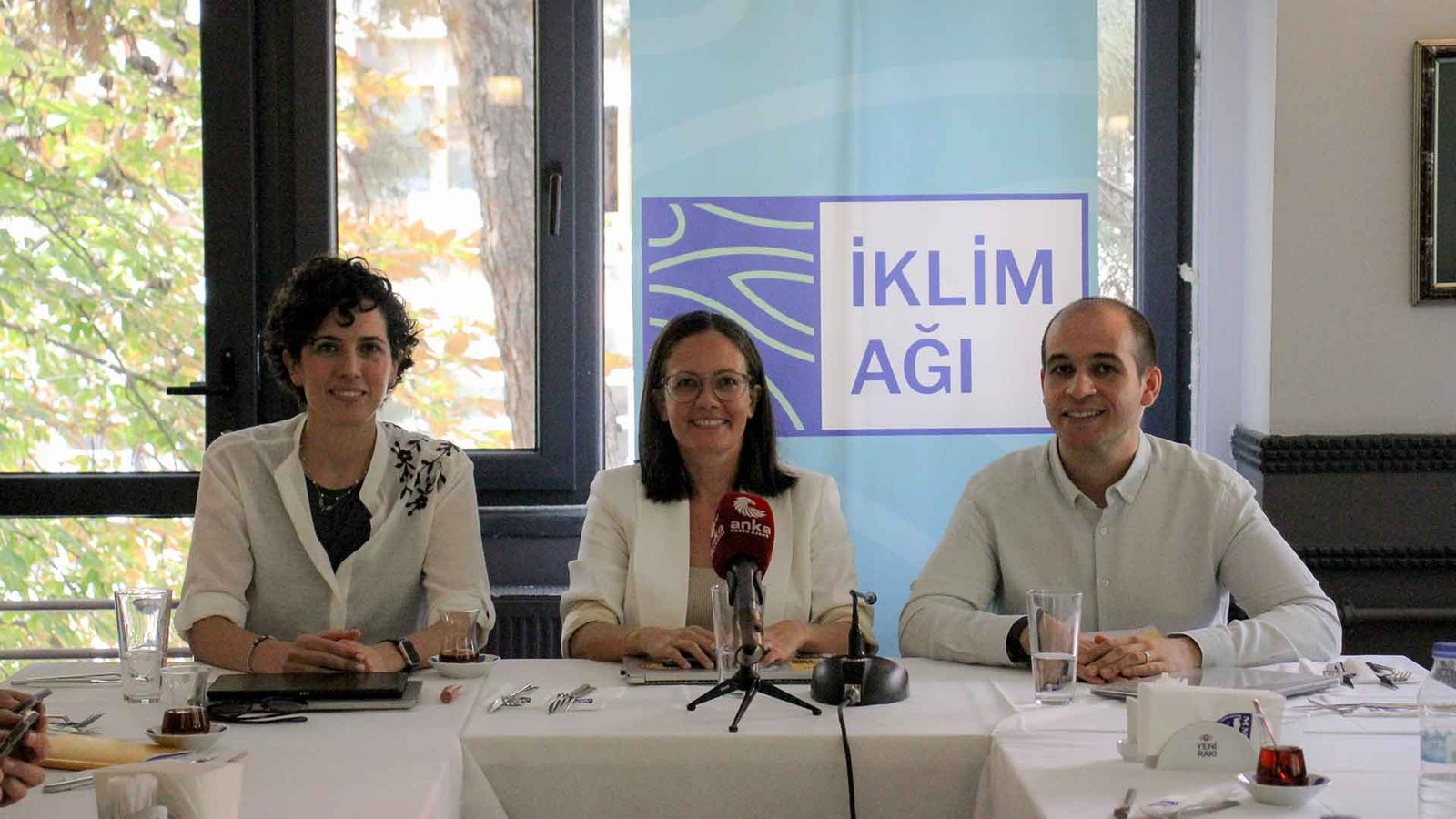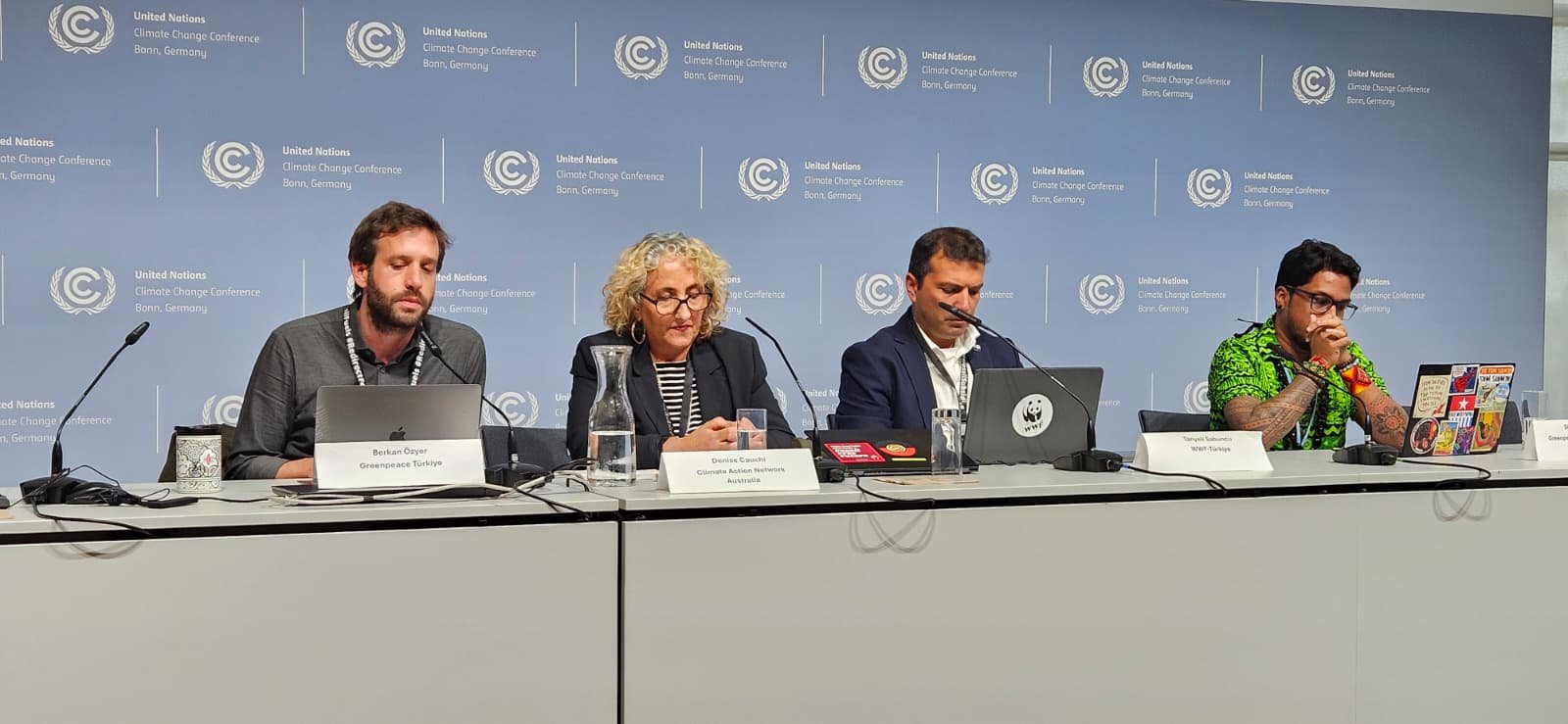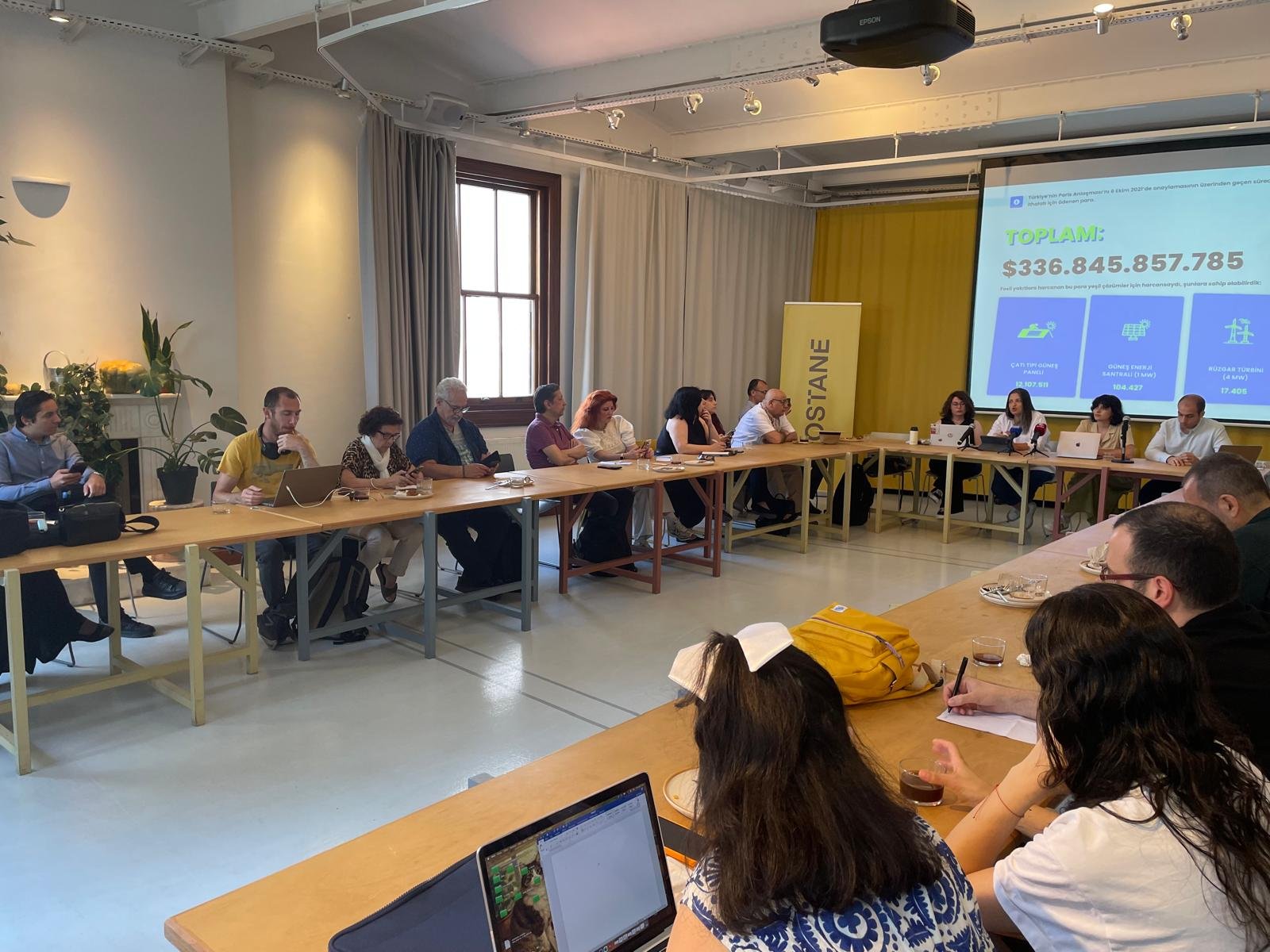
The Climate Network Türkiye (İklim Ağı), a coalition of 16 civil society organisations working on climate issues, held its second press conference ahead of two notable moments: World Environment Day on 5 June and the COP31 preparatory negotiations that will begin in Bonn on 8 June. During the meeting, the Network shared its assessments and recommendations regarding Türkiye’s hosting and presidency of COP31.
At the press conference held at Postane Istanbul, representatives of the Climate Network Türkiye emphasised that energy policies dependent on fossil fuels (oil, gas, and coal) are making countries increasingly vulnerable to both the climate crisis and geopolitical tensions. They noted that the conflicts unfolding around Ukraine and Iran have further exposed this vulnerability and stressed that COP31 presents a critical opportunity for a just transition away from fossil fuels.
The Future Is Heating Up: The Solution Is a Just Transition Away from Fossil Fuels
Representatives stated that phasing out fossil fuels is of vital importance for countries like Türkiye, which are both highly vulnerable to the impacts of climate change and heavily dependent on energy imports. Scientific studies show that if current global trends in fossil fuel use continue, Türkiye’s climate will undergo a catastrophic transformation. According to projections, the hot-arid climate zone, which currently affects approximately 55 percent of the country’s territory, could expand to 70 percent by the 2040s and 80 percent by the 2070s. Precipitation patterns are expected to weaken, while the risk of desertification is likely to increase in some regions.
In this context, representatives stressed that the first and most important step Türkiye can take to set an example in global efforts to end fossil fuel consumption is to announce a just coal phase-out timetable.
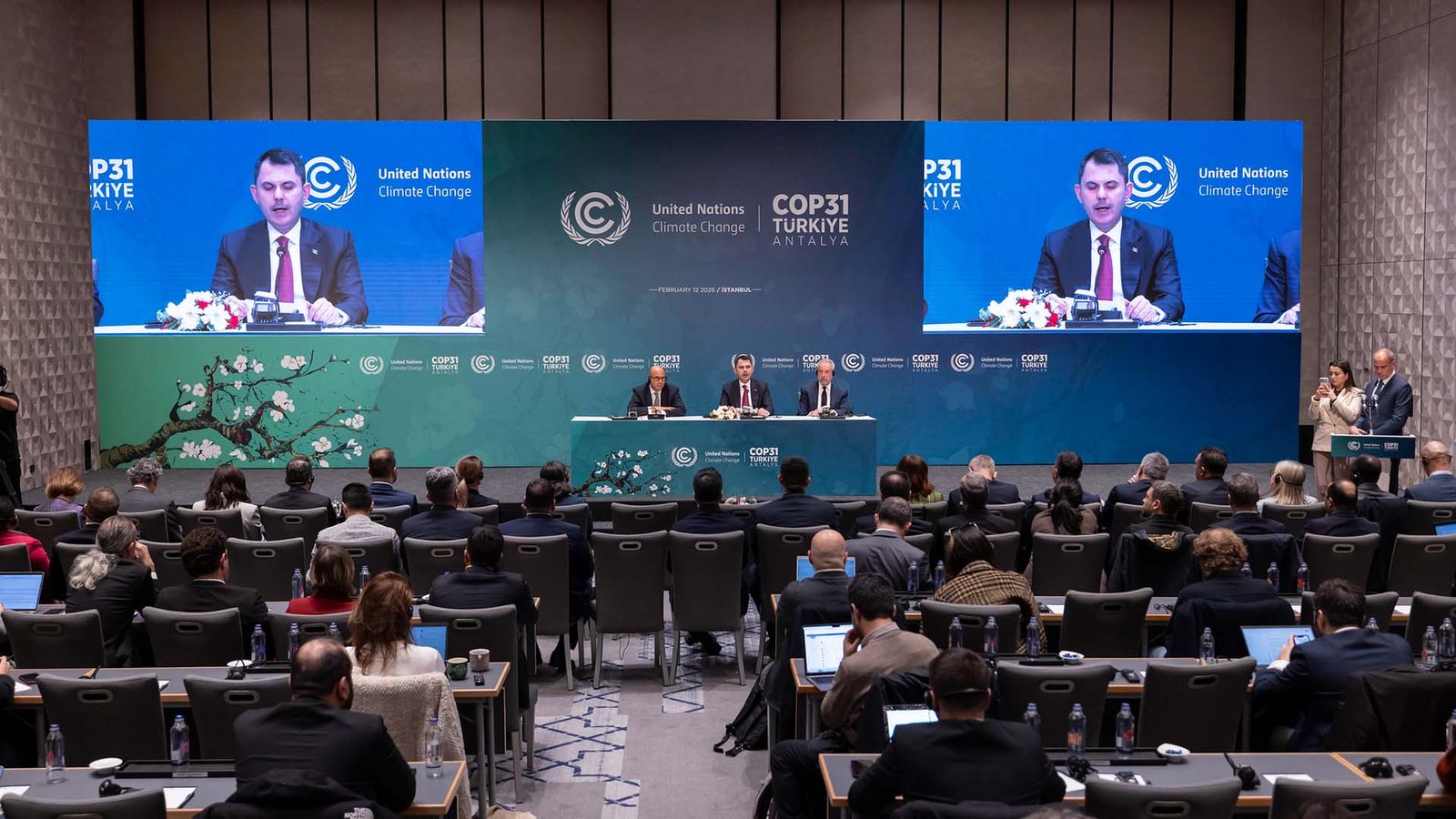
As a reminder, Minister of Environment, Urbanization and Climate Change and COP31 President Murat Kurum stated at the opening session of the 17th Petersberg Climate Dialogue that the world had experienced a second energy supply crisis within four years, demonstrating that “fossil fuels do not guarantee energy security.” Similarly, at COP28 in Dubai in 2023, countries agreed to accelerate the transition away from fossil fuels across all sectors and speed up the deployment of renewable energy by 2030.
“Persisting with Fossil Fuels Makes Türkiye More Vulnerable”
Ayşe Mine Doğan from WWF-Türkiye, a member organisation of the Climate Network, highlighted that Türkiye’s high dependence on imported fossil fuels increases not only energy insecurity but also economic and environmental vulnerabilities:
“Türkiye imports 78 percent of the fossil fuels it uses for energy production. Persisting with fossil fuels translates into energy dependency, high energy bills, worsening air, water and soil pollution, and increasing health problems. Moreover, as recent conflicts around Ukraine and Iran have shown, a fossil fuel-based energy system makes Türkiye far more vulnerable to global crises. Nearly 60 percent of Türkiye’s electricity is generated from fossil fuels, and one-third comes from coal, the dirtiest fossil fuel. Approximately 60 percent of the coal used is imported. This clearly demonstrates that fossil fuels are not a solution to energy security.
Located in the Mediterranean basin, Türkiye is among the countries most affected by the climate crisis. Therefore, achieving the country’s 2053 net-zero target requires rapidly expanding renewable energy solutions that are compatible with nature and social justice, strengthening energy efficiency measures, and accelerating electrification. In times of crisis, true energy security lies not in fossil fuels but in accessible renewable energy systems such as solar and wind power. As a first step, Türkiye must abandon plans for new coal-fired power plants and announce a timetable for a just coal phase-out.”
“Those Least Responsible for the Climate Crisis Bear Its Heaviest Burden”
Yağız Eren Abanus, Climate Justice Program Coordinator at Mekanda Adalet Association, another member of the Climate Network, emphasised that dependence on fossil fuels deepens not only vulnerabilities in energy systems but also global inequalities and conflict dynamics:
“The wars we are witnessing today reveal not only how fossil fuel dependency makes energy systems fragile, but also how militarism, resource competition, and unequal power relations deepen global injustices. The heaviest burden of war is borne by civilians, displaced communities, and vulnerable countries. Likewise, the impacts of the climate crisis fall disproportionately on societies that are historically least responsible for it.
For this reason, a just transition away from fossil fuels is not merely an energy policy issue; it is also a matter of climate justice that can strengthen peace, international solidarity, and fair cooperation among countries. At a time when wars and multilayered inequalities are intensifying, the climate justice movement must advance in ways that reinforce democratic participation, rights-based policies, and international solidarity. In this regard, our key expectation is that Türkiye will embrace and advance the outcomes of the Santa Marta Fossil Fuel Non-Proliferation Conference at both the national and international levels, particularly in the upcoming climate negotiations in Bonn.”
Fossil Fuel-Based Energy Systems Are Environmentally, Economically and Geopolitically Unsustainable
Emel Türker Alpay, Climate and Energy Campaigns Officer at Greenpeace Türkiye, and Özge Doruk, Project Coordinator at Yeşil Düşünce Association, underlined that fossil fuel-based energy systems are unsustainable not only environmentally but also economically and geopolitically.
Focusing on coal-fired power plants in Türkiye, Alpay stated:
“Coal-fired power plants generate 34 percent of Türkiye’s electricity. However, two-thirds of this coal-generated electricity comes from plants fueled by imported coal. Therefore, coal-fired power plants are neither the only option for electricity generation nor a source of energy independence.
The absence of a just transition plan leaves workers in coal-fired power plants and coal mines facing uncertainty. The situations experienced by workers in Soma, Eskişehir, Afşin, Elbistan and many other places are not inevitable. If a roadmap for a just transition away from coal is not prepared, despite the sector’s dependence on state subsidies, similar examples will only increase. We need a clear roadmap that leaves no one behind.
Türkiye can demonstrate the sincerity of its climate leadership ambitions under the COP31 presidency by taking concrete steps away from fossil fuels, beginning with a decision to phase out coal. The first necessary step is to cancel the planned additional units at the Afşin-Elbistan A Thermal Power Plant. We are hopeful about the court hearing on 11 June that will review the cancellation of the project’s Environmental Impact Assessment (EIA) report. Reaching COP31 without new coal power projects and establishing a roadmap for a just coal phase-out are of critical importance.”
Özge Doruk added that in an energy system heavily dependent on imports, every wave of crisis directly translates into economic instability, rising costs, and growing social pressures:
“This situation demonstrates that moving away from fossil fuels is no longer merely a long-term climate objective; it is also an immediate energy security issue. Yet this transition is already progressing in a fragmented and unplanned manner on the ground. That is precisely why the way a just transition is designed has become so important.
As the existing fossil fuel-based structure is dismantled, any transition that fails to consider its social impacts risks deepening existing vulnerabilities. Particularly during times of crisis, placing the costs of transformation on certain segments of society can exacerbate both economic and social inequalities. Therefore, it is critical that Türkiye’s next steps focus not only on transforming energy production but also on managing this transformation in an inclusive, planned, and socially balanced way.”