UPDATE (March, 2026)
Civil society organisations working in the field of climate change have been monitoring the climate targets set by Türkiye under the Paris Agreement (adopted under the United Nations Framework Convention on Climate Change, to which Türkiye is a party) since they were first announced in 2015. The emission reduction target announced by Türkiye in 2015 (then referred to as an Intended Nationally Determined Contribution, or INDC) was determined relative to a reference scenario based on Türkiye’s 2012 gross emissions (excluding sinks (such as forests and oceans) that naturally capture and store greenhouse gases released into the atmosphere; the calculation was based solely on emissions from greenhouse gas sources such as energy, industry, agriculture and waste). The climate target announced in 2025 for 2035 (Nationally Determined Contribution, NDC), however, was set with reference to net emission levels (which account for total emissions including sink capacities). Due to this change in the definition of the target, the Climate Network Türkiye felt it necessary to update its calculation of how much Türkiye’s climate target would increase emissions by 2035 compared to current emission levels. According to the latest published greenhouse gas emissions inventory, Türkiye’s greenhouse gas emissions stood at 483 million tonnes of CO2 equivalent in 2023, whilst the government’s stated target is to increase this to 643 million tonnes of CO2 equivalent by 2035. Accordingly, Türkiye aims to increase its emissions by 33 per cent by 2035.
—
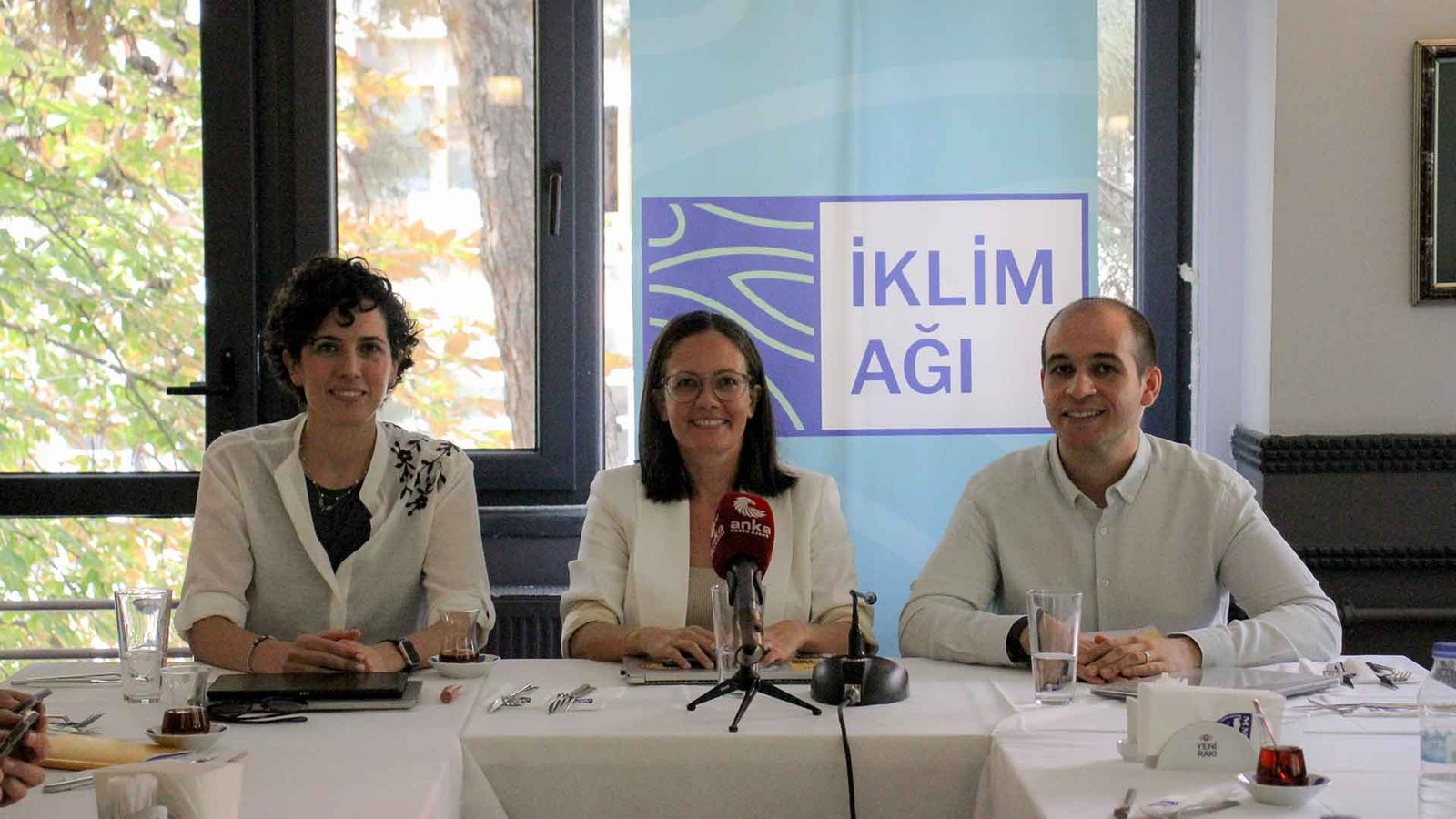
The İklim Ağı (Climate Network Türkiye) stated that Türkiye’s 2035 climate target will increase greenhouse gas emissions by 16% compared to 2023, rather than reducing them. The statement emphasised that unless Türkiye begins reducing greenhouse gas emissions immediately, society will not be able to become resilient to the climate crisis.
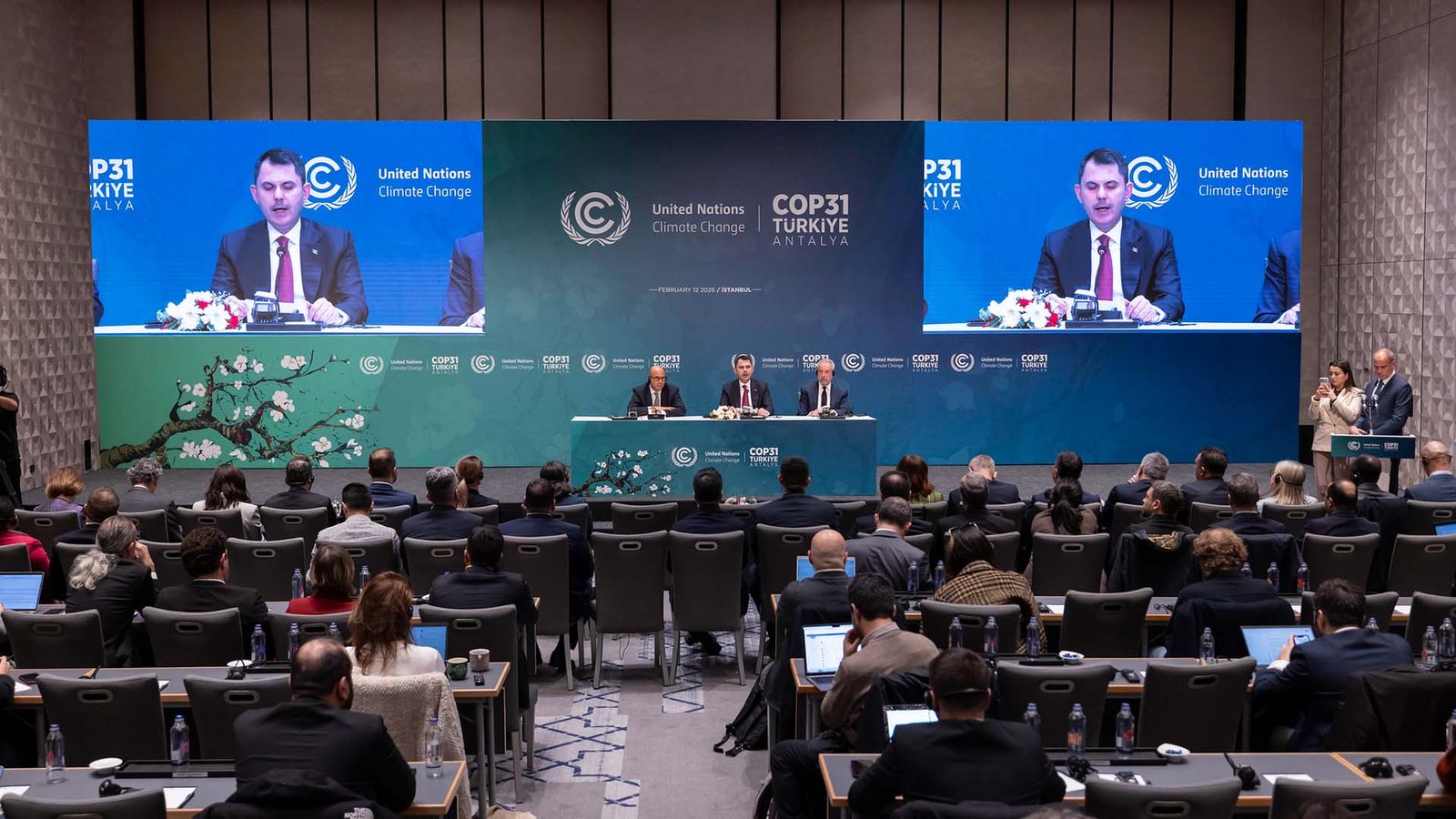
President Recep Tayyip Erdoğan announced Türkiye’s Nationally Determined Contribution (NDC) for 2035, commonly referred to as the country’s climate target, during the United Nations Climate Summit held in New York.
Following President Erdoğan’s announcement, the Climate Network Türkiye, which brings together 15 civil society organisations working in the field of climate, issued the following statement drawing attention to the shortcomings of the target and the risks it poses:
“Located in the Mediterranean climate zone, Türkiye is among Europe’s most vulnerable countries to the impacts of climate change. Forest fires, floods, drought, and losses in agricultural production are negatively affecting all segments of society. For this reason, we need an effective climate target, one that will make us more resilient to the climate crisis, more than ever. A strong climate target enables the decarbonization of economies and ensures that a just transition for society can take place in a timely manner.
However, the announced target was once again prepared without respecting the principle of participation and without taking into account the views of expert civil society organizations working in the field of climate.
The 2035 Climate Target announced by President Erdoğan aims for a reduction from projected emissions growth. In other words, it does not entail an absolute reduction in emissions, but rather a reduction relative to a projected increase. This means that under the current growth scenario used as a reference, greenhouse gas emissions will continue to rise, and the climate target envisages a reduction only in relation to this growth trajectory. In practice, this implies that greenhouse gas emissions in 2035 will be 16% higher than in 2023.
In his statement, President Erdoğan did not address Türkiye’s coal-based energy policies. However, the coal incentive plan for coal-fired power plants announced earlier this month by the Ministry of Energy and Natural Resources demonstrates an intention to expand the role of coal in electricity generation. What should instead be done is to establish a just transition mechanism for workers and local economies affected by the collapsing coal economy. At a time when we should be moving forward in the fight against the climate crisis, this target represents a step backward.
Meanwhile, Omnibus Law No. 7554, adopted under the justification of facilitating renewable energy investments, alters permitting processes in a way that disregards nature conservation principles and the participation of local communities. Renewable energy should not be implemented by destroying nature or ignoring social consent; it must be developed through mechanisms that protect nature and ensure the participation and benefit of local communities. Otherwise, solutions that are meant to be climate-friendly will create new ecological and social problems.
Moreover, through Omnibus Law No. 7554, our water resources, soils, olive groves, forests, and cultural assets have been opened to mining, placing them under unprecedented threat. The first concrete implementation of this law was the uprooting of olive trees in Akbelen.
The 2035 climate target includes not a single measure aimed at expanding or strengthening protected areas, nor any measures related to adaptation and resilience to the climate crisis. How cities will be made more resilient to disasters, or how food security will be ensured in the face of increasing drought, remains unclear.
Yet nature is our ally in combating the climate crisis. To protect the climate and make society resilient to climate change, we must begin reducing greenhouse gas emissions immediately. In line with the 1.5°C threshold and Türkiye’s 2053 net-zero target, the following steps must be taken:”
Required Steps
Phase-out of fossil fuels:
To combat the climate crisis, Türkiye must begin reducing emissions immediately. A clear date must be announced to end coal use in electricity generation and to terminate new investments in gas and oil. Misleading solutions such as nuclear energy, hydrogen production from nuclear power, and carbon capture and storage should be avoided. All fossil fuel subsidies must be abolished by 2030. The capacity of electricity transmission and distribution networks must be expanded.
Just transition:
By 2030, a Just Transition Mechanism must be established to ensure vulnerable groups are not left behind, including measures to address workforce transformation in fossil fuel sectors and energy poverty.
Nature conservation:
By 2030, the share of protected areas must be increased to 30%, and at least 30% of degraded ecosystems (forests, wetlands, agricultural lands, etc.) must be restored.
Food security:
The share of agroecological and regenerative agricultural practices (including organic farming) within existing agricultural lands must be increased to 10%. Water consumption in agriculture must be reduced by 50% through appropriate crop planning and water-efficient irrigation systems.
Combating forest fires:
Traditional fire prevention methods must be implemented in light of new climate projections, and the training and equipment capacity of forest fire response organisations must be strengthened to align with the new fire regime.
Health:
To achieve ecosystem-based solutions, green space per capita must nearly double. Planning must be undertaken for populations at risk of health problems from heatwaves. All air pollutants must be measured and monitored, and exemptions that allow pollution from fossil-fuel–based power plants and industrial facilities under environmental legislation must be abolished.
Statements
Gizem Koç, Lawyer, ClientEarth:
Notifying a climate target is also a legal obligation. Under the Paris Agreement, Türkiye is required to announce an ambitious, science-based climate target aligned with the goal of limiting the rise in global average temperature to 1.5°C. In July, the International Court of Justice, the United Nations’ highest judicial body, stated that NDCs are not solely at the discretion of states and that climate targets that are incompatible with the objectives of the Paris Agreement may be brought before national courts. The Court emphasised that every effort must be made to set appropriate climate targets. Previously, the European Court of Human Rights ruled that Switzerland violated human rights due to insufficient climate targets and policies. Courts in numerous countries have issued similar rulings.
Tanyeli Behiç Sabuncu, Climate and Energy Program Director, WWF-Türkiye:
Türkiye’s 2035 climate target is not compatible with the 1.5°C threshold. A reduction relative to projected growth, based on growth scenarios, means emissions will be higher than today ten years from now. As the climate crisis threatens our country with drought, floods, and food crises, we have no time to lose. Türkiye must begin reducing emissions immediately, announce a coal phase-out plan, and launch a just energy transition that places society at its centre.
Özlem Katısöz, Türkiye Climate and Energy Policies Coordinator, Climate Action Network (CAN) Europe:
When President Erdoğan announced the 2053 net-zero target in 2021, he stated that achieving it would require deep transformations in employment, investment, and production. Over the past four years, Türkiye has moved away from this ambition. The most concrete example is the uprooting of olive groves in Akbelen for coal mining, under the latest omnibus law, which has also been brought before the Constitutional Court. Instead of expanding coal extraction, we urgently need ambitious emission-reduction targets that include a phase-out of fossil fuels, especially coal. The current 2035 target does not contribute to global climate efforts; on the contrary, it makes our country more vulnerable and exposed to deeper crises. Türkiye’s choice must not be short-term fixes but long-term solutions, and to stand on the side of the climate.
Bengisu Özenç, Director, Sürdürülebilir Ekonomi ve Finans Araştırmaları Derneği (SEFiA):
For a long time, we have emphasised that the reference scenario in Türkiye’s previous NDC, which represents emissions under a “business-as-usual” economy without mitigation measures, was not a scientific scenario. Our core demand was that this scenario, which has not been updated since 2015, be reassessed in light of developments over the past decade and scientific evidence, thereby placing Türkiye’s climate policies on a more credible footing. One of the significant changes in the newly announced NDC is the update to this reference scenario. While the relative improvement is positive, Türkiye still states that, under this scenario, it will increase emissions at twice the rate of the past 30 years, casting doubt on its climate targets.
Efe Baysal, Chair, İklim için 350 Derneği (350 Türkiye):
At the Climate Change and Adaptation Coordination Board (İDUKK), which is the highest authority in climate policy, there is no institution with a mission to halt climate change and no climate expert body is represented. We believe this is one of the main reasons for the inadequacy of climate policy. Indeed, the 2035 NDC was prepared in an environment lacking participation and transparency, and as a result, it does not serve the fight against climate change or climate justice.
Emel Türker Alpay, Climate and Energy Campaign Lead, Greenpeace Türkiye:
Türkiye’s weak climate target for 2035 is the clearest indication that we are failing to take the necessary steps to protect nature and society. This approach, which allows emissions to continue rising, is pushing our forests, wetlands, and agricultural lands toward irreversible destruction. Nature protection should be our strongest shield against the climate crisis. Advancing with targets that open space for coal and nuclear power instead of strengthening natural assets will leave Türkiye more fragile and without a future.